
Among the many rewards that come with the job of a landscape photography tutor is the opportunity to be out on location on a frequent basis. It is worth mentioning that landscape photographers love nature and the environment; the vast majority of us, anyway. So, being outdoors and at one with nature is something I consider a genuine privilege. Another benefit is that, on a full time basis, you talk, breathe, and live photography. Surely, for any passionate landscape photographer, this is also a wonderful thing. However, one of the greatest rewards is the experience of running photographic workshops.
The good tutor
At this point, I need to emphasise that not every professional photographer enjoys running workshops; some do so purely because they provide a source of income. Let us take a closer look at this, though. Running workshops means that you are constantly socialising and interacting with people; occasionally you also find yourself helping them with personal problems.
A very good photographer is not necessarily a good tutor; equally, a good tutor is not necessarily a good photographer. To run successful workshops, you need to be a skilled photographer, an effective tutor, and an excellent diplomat. If you possess all these qualities, then you could well be on the road to success.
But I better return to my original point: the benefits of being a professional photographer. For me, the greatest reward, and the one that brings me the most satisfaction, is pointing out interesting compositions to clients and watching their faces light up with excitement.
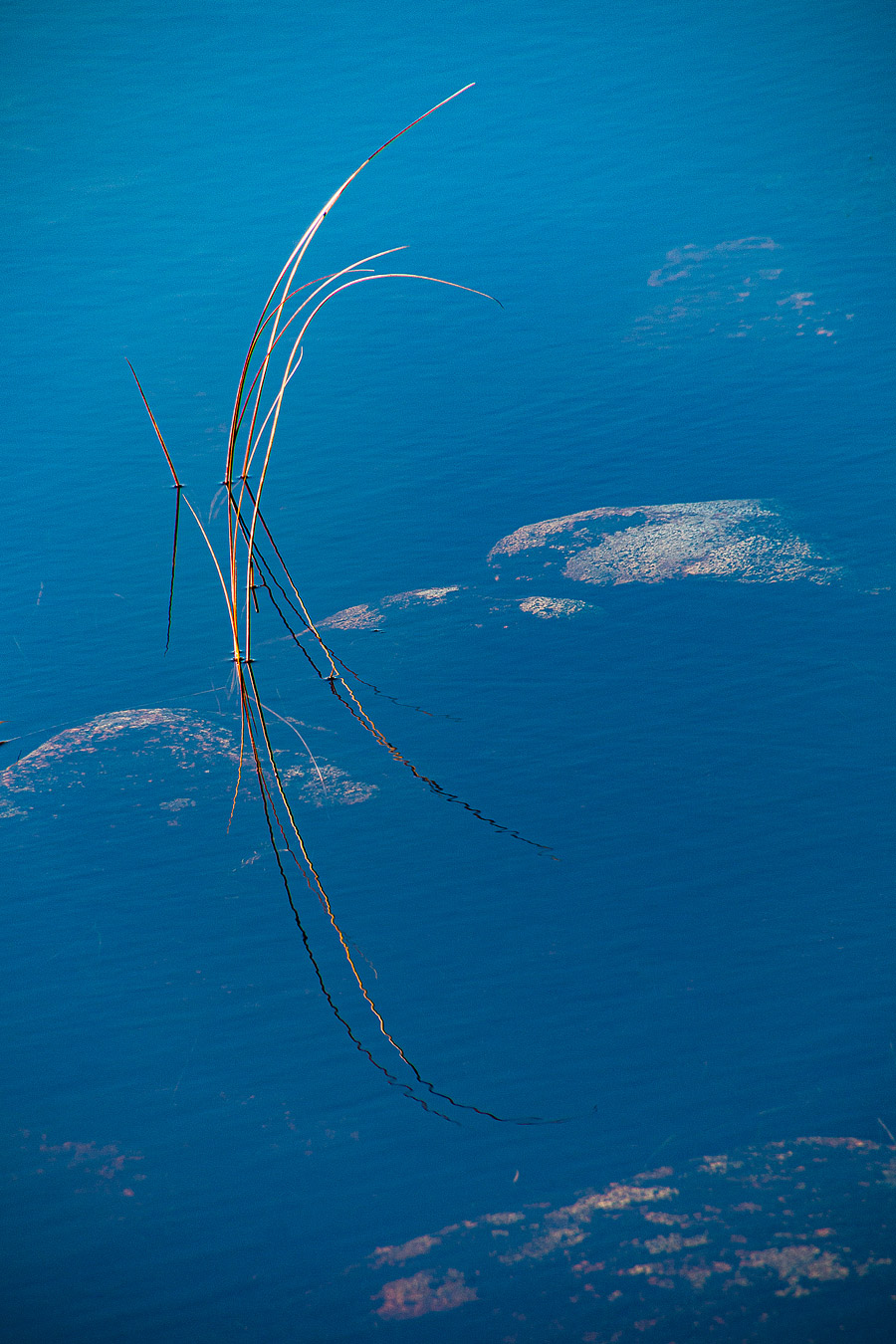
Take this photograph, for instance. We were standing on the shore of Loch na h-Achlaise, on Rannoch Moor in Scotland. It was a beautiful November morning: no wind, a clear sky, and perfect reflections across the surface of the water. Everyone was having a wonderful time discovering compositions and doing their best to capture them.
As I always do, I moved among the group, making sure everyone was comfortable with what they were doing and, whenever needed, offering advice. One thing I particularly enjoy is wandering around, discovering potential images, composing them through my camera, then showing them to my clients and discussing what makes them work.
The things we miss
I must admit that most clients are very good at spotting wide angle compositions. The real challenge begins when we start looking for a picture within a picture; or, if you prefer, an extract of the landscape.
When I showed them this image, which was literally right in front of us, the comments that followed were fascinating: Where is that? How did you see that? Oh my, how did I miss it?You get the idea.
When we are still learning, it is relatively easy to search for and recognise wide angle compositions. However, learning to see smaller extracts of the landscape beyond us requires practice. You need to train yourself to develop a kind of tunnel vision.
The best advice I can offer is this: pay attention to your surroundings, not just to what lies directly in front of you. Look down; look behind you; scan the landscape carefully. Reach for that other lens, the one you hardly ever use: the 70-300mm. Believe me; once you begin looking in this way, you will be amazed by how many photographs you start to see.