Rule of thirds; rules about where the sky should sit in the frame; whether it should occupy one third or two; rules for this and rules for that. Good heavens. I still remember my early days as a landscape photographer and the panic, even the sense of mild crisis, that could arise while composing an image. One had to remember procedures and principles; check the ISO; consider the aperture; review this and that. It was a pure headache. And although I believe these are not rules in any strict sense but rather guidelines, people still panic and can become almost obsessive when the rule of thirds enters the discussion.
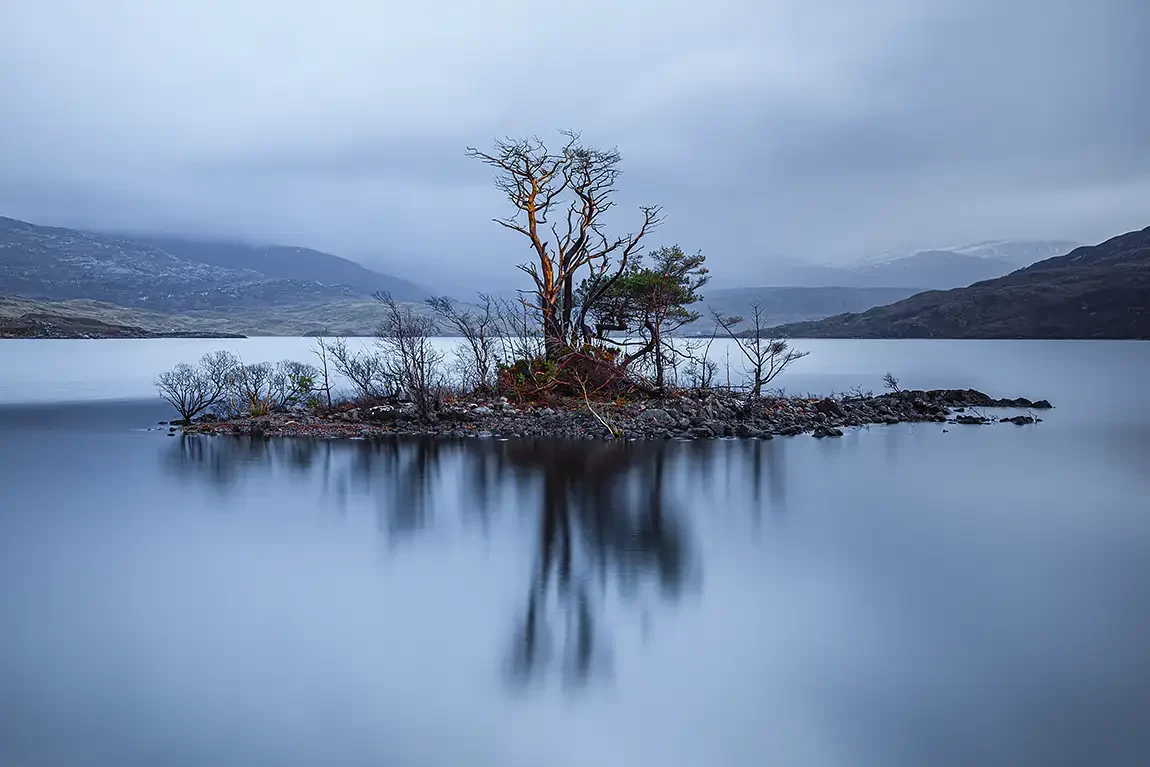
Take this photograph, made at sunrise on a small island in Loch Assynt, Assynt, Scotland. I love the way the island sits calmly in the loch; the surrounding mountains seem to incline toward the water; the solitary tree reaches upward into the sky. The moment I composed the scene and viewed it through my viewfinder, I knew that placing the tree at the centre of the frame was the right decision. It was how the photograph needed to look. When I frame a scene, the first question I ask is not whether the rule of thirds is satisfied, but how the subject feels at its strongest. If the rule of thirds supports that intention, I use it; if it does not, I set it aside without hesitation.
Does this make me a rebel; someone who refuses to follow rules in life; a habitual rule breaker? None of the above. The way I see it, people can become so entangled in rules and regulations that they miss the wood for the trees. Photography is about enjoyment, reflection, and a relationship with nature; it is not a competitive game governed by rigid instructions. What matters most is time. Time spent outdoors; time spent observing. Avoid rushing out simply to capture an image. That is not how photography works. Go into the landscape and remain there. Walk around the subject; study it from different angles; allow yourself to settle into the place. When the right composition reveals itself, pause to appreciate it. Photograph it in the existing light; then wait. Let the light change and try again.
On this occasion, I arrived about an hour before sunrise. I had visited the location before and was familiar with the subject. Instead of beginning with ideas of inspiration or composition, I approached the scene with light and colour in mind. It soon became clear that my expectations were undone, like sandcastles meeting the tide. The anticipated sunrise never arrived. Diffused light and a cool blue atmosphere defined the morning, leaving me to reconsider my approach. Then it became obvious: a strong image was already there, quietly waiting. I had simply overlooked it. I reacted quickly, shifted my thinking, and made the necessary adjustments. An ND filter slowed the shutter speed, preserving a subtle sense of motion on the water. The result was a composition that breaks familiar rules. To some it may appear unconventional; to me, it felt right then, and it still does today.